Chancellor Considers Doubling Slot Machine Tax Rate in Upcoming Budget
Written by Casey Simon · Sep 10, 2026

Chancellor Considers Doubling Slot Machine Tax Rate in Upcoming Budget
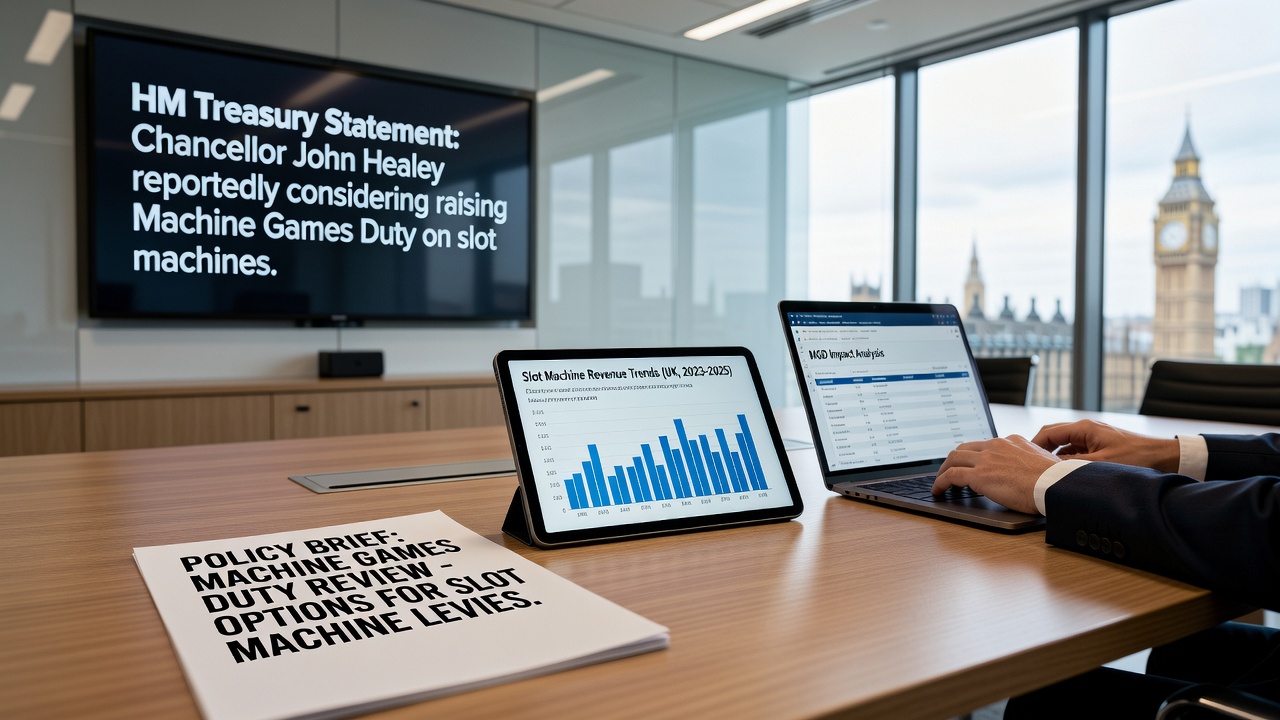
UK Chancellor John Healey is reportedly weighing an increase to Machine Games Duty on slot machines ahead of the October 28 budget, with discussions centering on a potential doubling of the rate for Category B machines from 20% to 40% as one option under review to address fiscal pressures and generate additional revenue for the treasury.
Reports from September 2026 indicate that the proposal builds on earlier suggestions put forward by the Social Market Foundation think tank, which examined ways to adjust gaming taxation while balancing revenue needs against industry sustainability, and the move comes at a time when the government continues to navigate broader economic challenges that have prompted fresh scrutiny of various tax streams.
Current Taxation Framework and Proposed Adjustments
Machine Games Duty applies to gaming machines located in betting shops, adult gaming centres, and similar venues across the UK, with Category B machines representing a significant portion of the equipment in operation today, and the existing 20% rate has remained in place for several years while operators have already absorbed previous increases in other areas of business taxation.
Under the reported consideration, raising the rate to 40% would mark a substantial shift in the fiscal treatment of these machines, and officials are examining how such a change might interact with ongoing budget preparations that seek to close revenue gaps without disrupting employment or local economies in the process.
Industry Context and Recent Developments
The betting and gaming sector has faced a series of tax adjustments in recent years that have already contributed to venue closures and workforce reductions, while operators continue to adapt to evolving regulatory requirements and shifting consumer patterns that affect footfall in traditional high street locations.
Those monitoring the situation note that any further rise in Machine Games Duty could compound existing pressures, potentially accelerating the pace of shop closures in betting shops and adult gaming centres that rely heavily on revenue from Category B machines to maintain viable operations in competitive markets.
Stakeholder Positions and Responses
The Betting and Gaming Council has voiced strong opposition to any increase in the duty, highlighting risks of additional job losses, further weakening of high street economies, and the possibility that higher taxation could drive more activity toward unregulated illegal gambling channels that operate outside government oversight.
Industry representatives have pointed to data on recent closures, including instances where over 540 betting shops shut their doors and approximately 4,500 positions were eliminated following earlier budget measures, and they argue that similar patterns could intensify if the proposed duty adjustment moves forward without corresponding mitigations.
Fiscal Pressures and Policy Considerations
Government sources indicate that the October 28 budget must address multiple spending priorities while identifying new revenue sources, and the examination of Machine Games Duty forms part of a wider review of taxation options that could help balance the books amid ongoing economic constraints.
Proponents of the adjustment, including those who have studied the Social Market Foundation's earlier work, suggest that gaming taxation remains one area where rates could be recalibrated to reflect current market conditions, while critics within the sector maintain that the cumulative effect of successive tax rises risks undermining the very businesses that contribute to the tax base.
Potential Outcomes and Sector Implications
Should the higher rate be implemented, operators would need to reassess their machine portfolios and venue strategies, with some locations possibly becoming unprofitable under the increased duty burden, and this could lead to accelerated consolidation within the industry as larger groups absorb or close smaller sites.
Analysts tracking the sector observe that the combination of tax changes and regulatory developments continues to reshape the landscape for physical gaming venues, prompting some operators to explore alternative revenue streams or digital platforms as a means of offsetting losses in traditional retail environments.
Conclusion
The reported consideration by Chancellor John Healey of raising Machine Games Duty ahead of the October 28 budget reflects the ongoing tension between revenue generation and sector stability, with the potential doubling of the Category B machine rate from 20% to 40% representing a significant policy decision that could influence future operations across betting shops and adult gaming centres. According to recent coverage of the discussions, the Betting and Gaming Council continues to advocate against the increase while the treasury evaluates options that balance fiscal needs with economic impacts on employment and regulated markets.